Most roller coaster companies start with a coaster. Rocky Mountain Construction started with a kid welding pipe collars onto irrigation pipe in Dubois, Wyoming, and the distance between those two things is a big part of why the company matters now.
Fred Grubb's road into the industry was long and unglamorous. As a deep dive into the company's origins lays out, he ran a home construction business with his older brother until it declined in the mid-1980s, moved to Seattle to build zoo exhibits, and only landed in the amusement world in 1995, when Silverwood Theme Park in Idaho hired him to build artificial rockwork. The park's owner, Gary Norton, was impressed enough to make him construction and maintenance director, and it was at Silverwood that Fred met his future wife, Suanne Dedmon, the park's finance director. When Norton wanted a wooden coaster, Grubb led the in-house build of Timber Terror, designed by Custom Coasters International, and then Tremors in 1999. CCI was impressed enough to offer him a job. Instead, he and Suanne took the leap and started their own company, and per the company history, Rocky Mountain Construction was founded in 2001.
The early years were a grind. The pair worked out of their home with about ten employees, and when they went to the big industry expo to network, their small and unknown outfit was not always welcomed. But persistence paid off. They picked up contracts to refurbish small wooden coasters and install sky coasters, built the Boulder Beach water park back at Silverwood in 2003, and eventually earned the trust to build two of Intamin's prefabricated wooden monsters, El Toro at Six Flags Great Adventure and T Express at Everland in South Korea, both of which still sit near the top of a lot of wooden-coaster lists. What really shows the character of the place is how it survived the 2008 financial crash. With amusement jobs scarce, RMC kept its people employed by doing whatever paid: ziplines in Park City, a water feature for Spokane International Airport, mini golf, airplane hangars, polished concrete floors, even shoveling snow. That refusal to lay off the crew is the kind of detail that gets lost behind the world records, and we would say it explains a lot about how the company operates.
- 1995: Fred Grubb joins Silverwood Theme Park (Idaho) to build artificial rockwork.
- 1999: Leads in-house builds of Timber Terror and Tremors, two wooden coasters.
- 2001: Grubb and Suanne Dedmon found Rocky Mountain Construction.
- ~10 employees: the company runs out of their home in its earliest years.
- El Toro & T Express: builds two of Intamin's prefab wooden giants, both still top-ranked.
- 2008: survives the crash on ziplines, mini golf, airport water features, even shoveling snow, all without laying off the crew.
The breakthrough came from frustration. After rebuilding dozens of wooden coaster tracks, Grubb was tired of watching parks tear down rides rather than pay to maintain them, and he came up with the idea of replacing layered wooden track with steel I-beams to cut maintenance and extend a ride's life. He pitched it to engineers around the industry, and they all told him the same thing: it could not be done. Around the same time, veteran designer Alan Schilke, then at Ride Centerline, was working with Six Flags on the aging Texas Giant, and the park suggested the two of them team up. They did, and after a long development the I-Box track was finished. Schilke is not a small name to have on your side, either. Per his design history, he had already created Tennessee Tornado and the original four-dimensional X at Six Flags Magic Mountain in his Arrow Dynamics days.
The first real test was the New Texas Giant at Six Flags Over Texas. It was a gamble for everyone. RMC had only about 15 employees, and its shop was not even built to manufacture coaster track, so the crew rebuilt the shop in a matter of weeks to weld the steel on site. Jake Kilcup, who started on that project and is now RMC's COO, has been candid about how unproven they were. In an interview on the AttractionPros podcast he recalled coming in when the company had roughly ten people, everyone wearing a lot of hats, and getting a fair amount of hate mail from fans who did not want their wooden Texas Giant touched. The finished ride answered them fast. When it reopened in 2011, RMC had kept the original structure, adapted the supports, and dropped in the new steel track, and a coaster that had grown rough and tired came back as one of the smoothest, most re-rideable things in the state. An enthusiast world that had never heard of RMC started paying close attention.
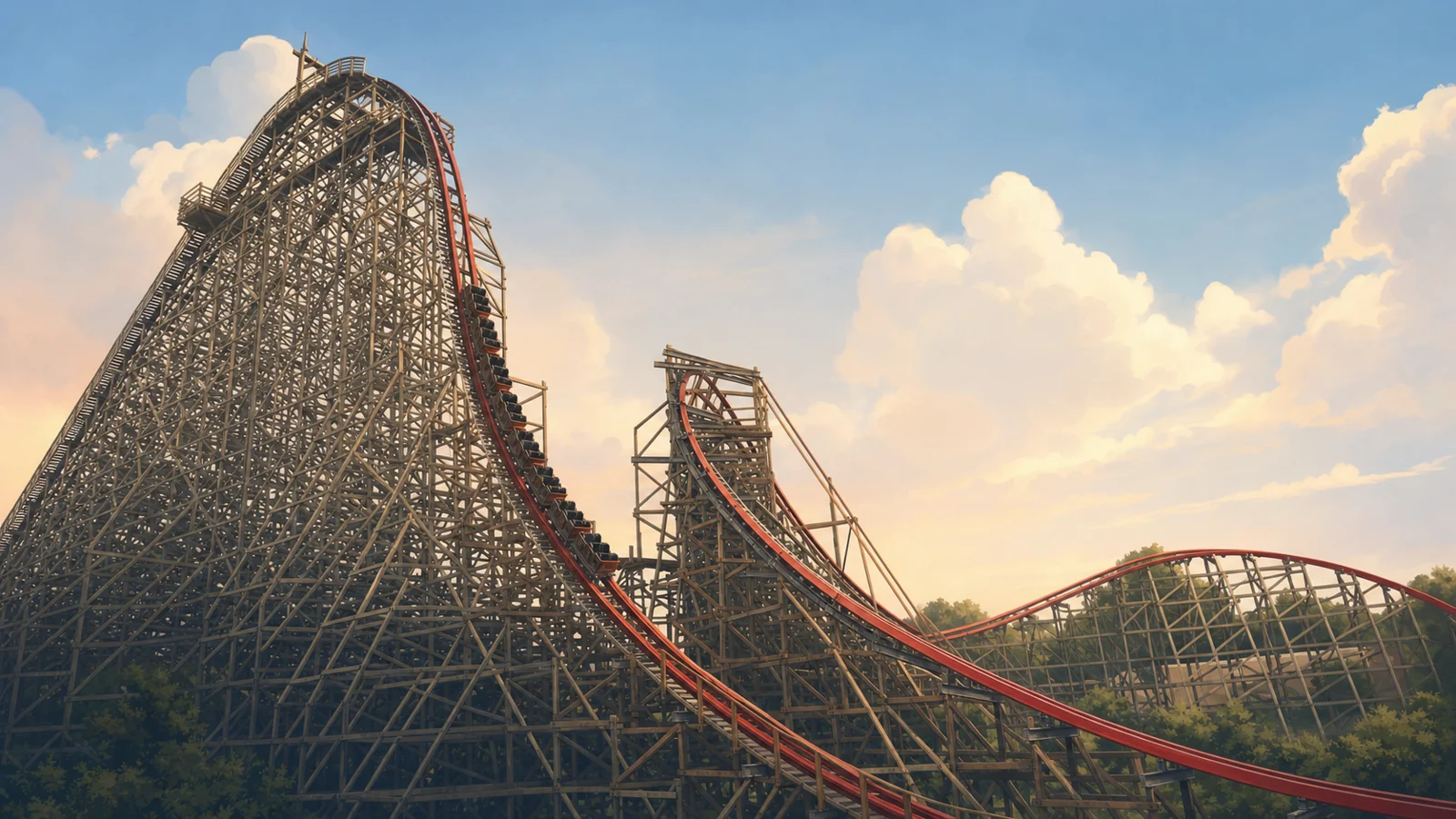
Then RMC stopped converting and started creating. In 2013 they opened Outlaw Run at Silver Dollar City in Branson, Missouri, and this is the one we would point to as the real turning point. It was the company's first ground-up coaster, built on their new Topper Track, which is a hybrid where steel replaces only the top layers of a stacked-wood track, so the ride still counts as wooden but can twist in ways traditional wood cannot. The technology took about four years to develop. Outlaw Run debuted with the steepest drop on any wooden coaster in the world at the time, an 81-degree plunge of 162 feet, ran up to 68 miles per hour, and threw in three inversions including a double heartline roll. Silver Dollar City billed it as the only wooden coaster with multiple inversions, a record it still shares with RMC's own Wildfire in Sweden. Outlaw Run is a short ride, and some people hold that against it, but we would say judging it on length misses the point. In 2013, a wooden coaster more twisted than anything the genre had produced was a statement, not a finished formula.
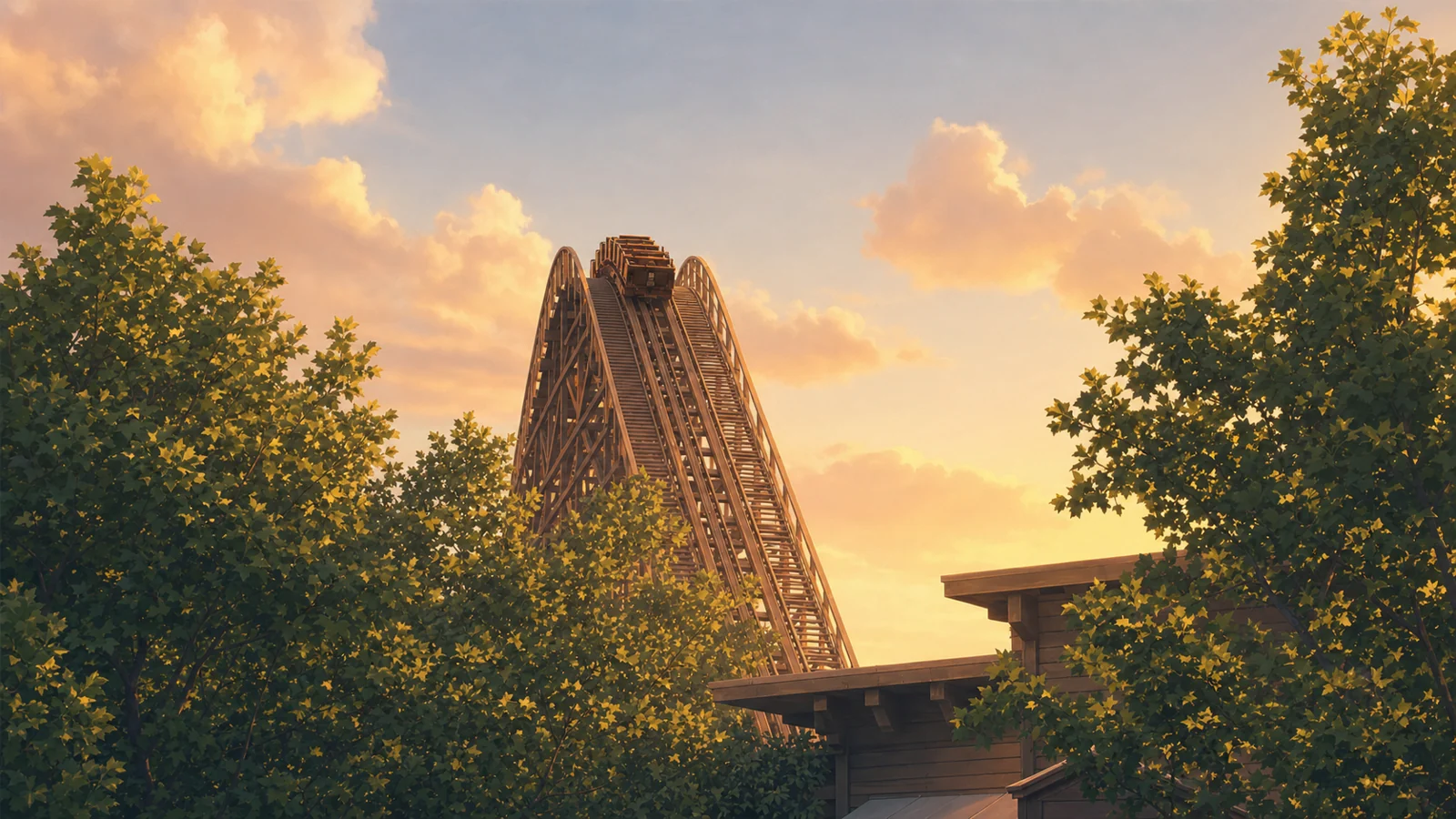
The same year brought Iron Rattler at Six Flags Fiesta Texas, an I-Box conversion of the old wooden Rattler that folded in the first inversion ever on an RMC hybrid. From there the snowball was real, and we would say this stretch is where RMC stopped being a clever idea and became a category of its own. Goliath at Six Flags Great America followed in 2014 with an 85-degree drop, a dive loop, and a zero-g stall. The company doubled its factory size, signed a deal letting Vekoma sell its coasters outside North America, and built Wildfire at Kolmarden, its first coaster in Europe.
| Ride | Park | Year | What it added |
|---|---|---|---|
| Iron Rattler | Six Flags Fiesta Texas | 2013 | First inversion on an RMC hybrid |
| Goliath | Six Flags Great America | 2014 | 85° drop, dive loop, zero-g stall |
| Wildfire | Kolmården (Sweden) | 2016 | First RMC coaster in Europe |
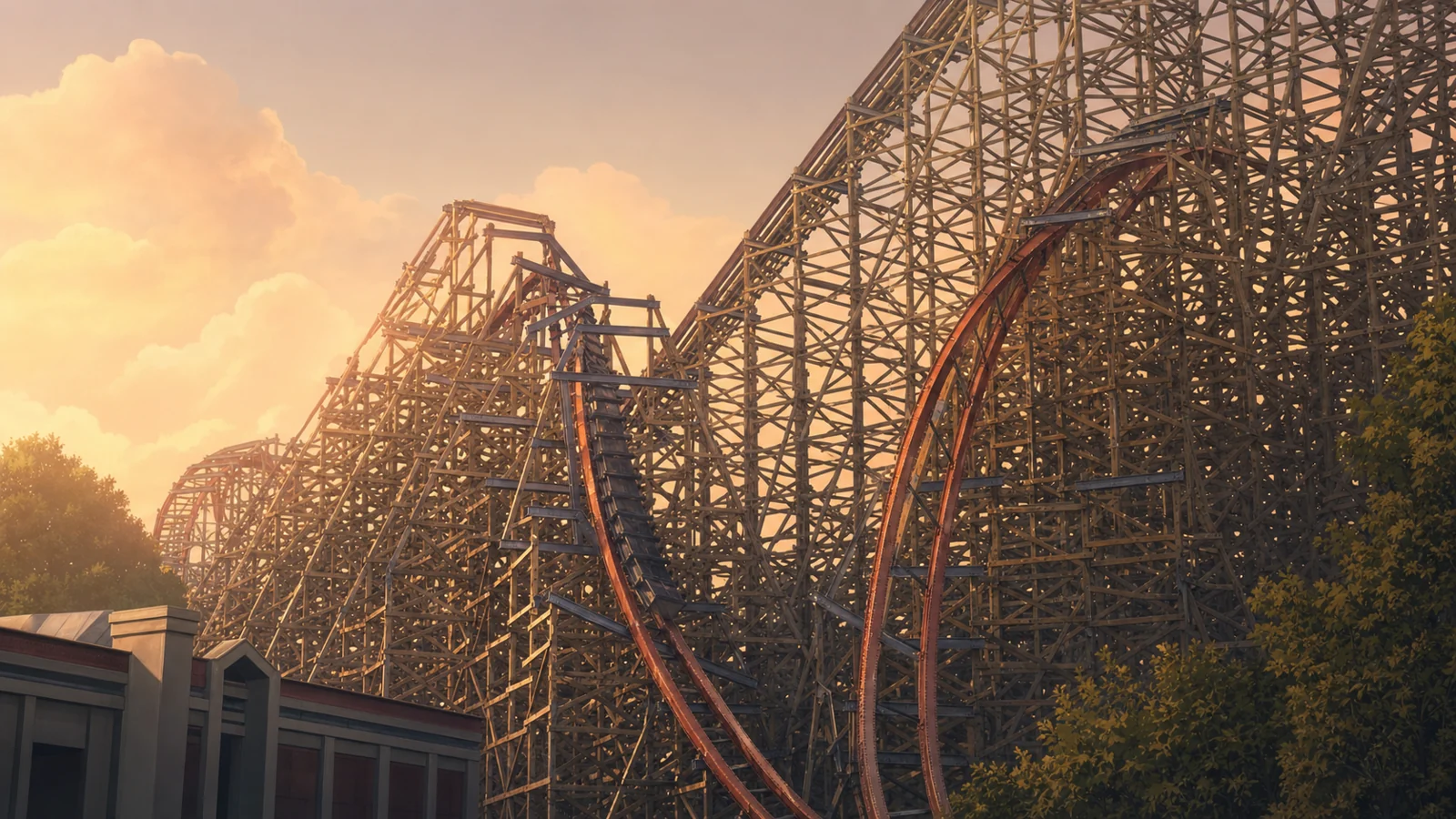
But the ride that turned RMC from a respected name into a legend is Steel Vengeance at Cedar Point. It opened on May 5, 2018 on the wooden structure of Mean Streak, which was a Dinn Corporation woodie from 1991 that had become so rough that, as Kilcup put it, the only real alternative was to level it. RMC kept the bones and built a monster: 205 feet tall, a 90-degree drop, 74 miles per hour, 5,740 feet of track, four inversions, and 27.2 seconds of airtime, the most of any coaster on Earth. It opened claiming ten world records and invented a category in the process, the hyper-hybrid, meaning a hybrid coaster taller than 200 feet. It still holds the marks for the longest hybrid and the most airtime on any coaster anywhere, and it regularly lands at or near the top of global rankings. We'd say that is a fair place for it. We would argue it is the most complete roller coaster ever built, because the stats, the record count, and the reclamation story all push in the same direction, and the fact that it lives on top of a structure Cedar Point was ready to demolish is the whole RMC thesis in one ride.
| Steel Vengeance by the numbers | |
|---|---|
| Height | 205 ft |
| Drop | 90° |
| Top speed | 74 mph |
| Track length | 5,740 ft |
| Inversions | 4 |
| Airtime | 27.2 sec, most of any coaster on Earth |
| Opening day records | 10 world records (May 5, 2018) |
What gets lost in the record talk is how much of this is a preservation story, and the people who do the work say so plainly. The feature-length documentary This Is How We Roll, made by Coaster Studios in 2021, frames Grubb as a risk-taking country boy who was determined to say yes where his competitors said no. Kilcup echoes the same idea about the rides themselves: the company tries to keep the spirit of what a coaster was while making it sustainable again, and he keeps pieces of lumber from old coasters around his house. The pitch to a park is usually simple. That beloved wooden coaster is getting too rough and too expensive to keep, and the choice is often a teardown or a phone call to Idaho. RMC's answer is to hold onto the legacy and the silhouette while quietly replacing what no longer works, which is a more sentimental business than the world-record marketing suggests.
The company kept widening its range after that. The Raptor single-rail line, where riders sit one behind another on a narrow steel track, opened the door to smaller parks that could never fit a giant. RMC also developed the 208 ReTrak, which is a lighter retracking system that first went onto Silverwood's Tremors in 2021. That is a tidy little loop, given that Tremors is the same Silverwood woodie Grubb helped build before RMC existed. In 2023 the family-owned outfit merged with Larson International, which is the company known for its Fire Ball flat rides, and that gave it more manufacturing muscle. As of January 2026, the running tally puts RMC at 29 coasters built or refurbished worldwide, and notably, every one of them is still operating.
The current slate shows a company that has outgrown the coaster-doctor reputation it earned in Idaho. RMC is building the Southeast's first single-rail coaster at Family Kingdom in Myrtle Beach, a custom Raptor standing 100 feet with three inversions and five airtime moments, due in late summer 2026. For a company that started in a house in Hayden with about ten people and a reputation for shoveling snow to make payroll, that is a long way to come, and we would say the through line has held the whole time: find the ride everyone else has given up on, and give it a reason to keep running.