Most record-chasing coasters go after a number. Tallest, fastest, longest, steepest, the kind of record that holds until someone with a bigger budget comes along and takes it. When Dollywood went looking for a headline in the mid-2010s, it chased a different kind of record, and that choice is the whole story of Lightning Rod. As the team at ElloCoaster put it, "Dollywood decided to go for 'first' rather than for some '-est' record that would eventually be broken. You can't ever take away the record for the first-ever something." That framing comes from ElloCoaster's writeup. So they built the world's first launched wooden coaster, opened it in June 2016, and spent the next eight years finding out exactly why nobody had ever launched a woodie before.
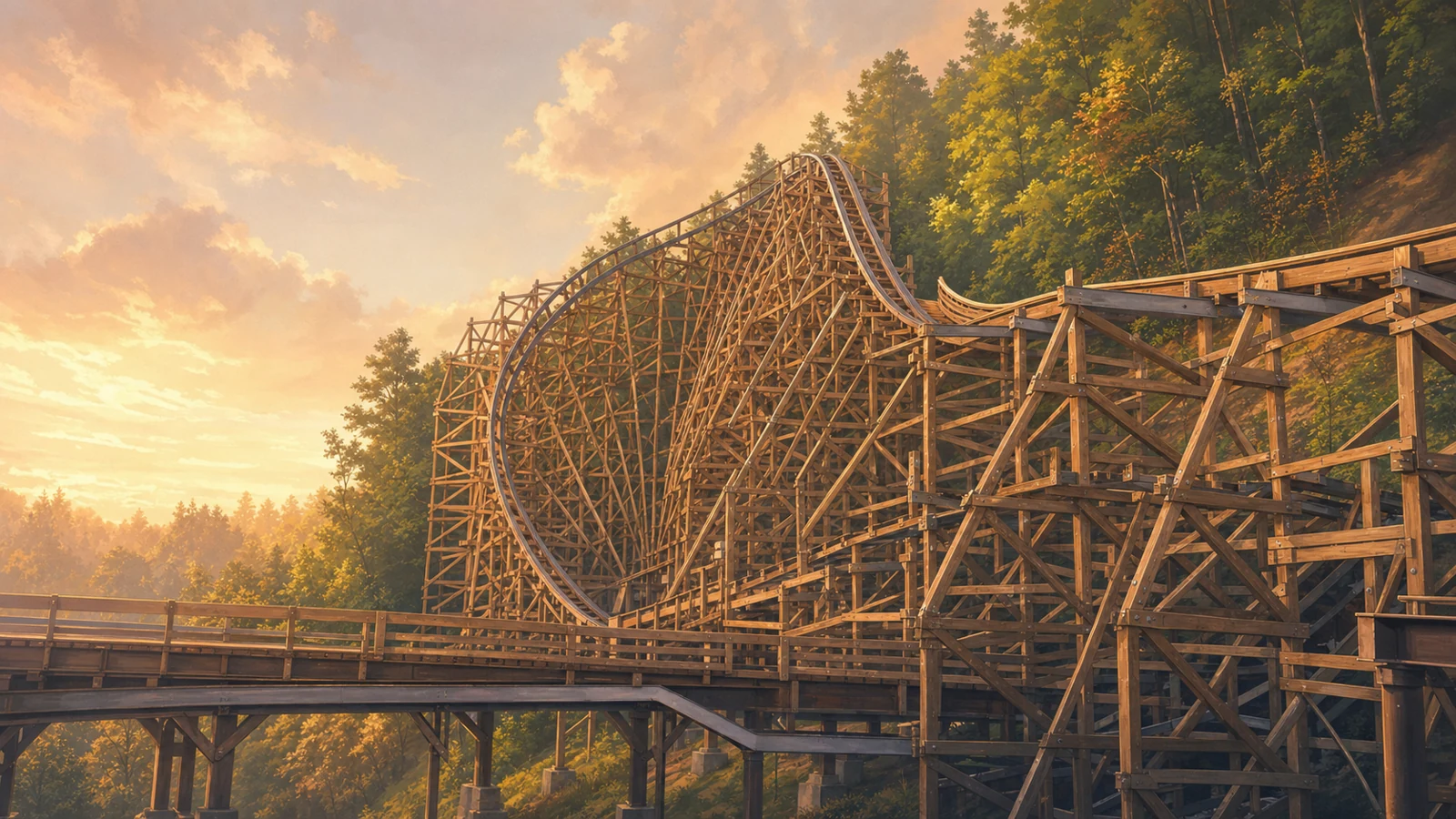
The ambition was real, and so was the engineering corner it painted everyone into. A traditional wooden coaster sends its train up the first hill on a chain or a cable, slow and clanking, the way woodies have done it for over a century. A launch is the opposite idea, a sudden magnetic shove that throws the train from a standstill up the hill under power. Lightning Rod's original system was an LSM, a linear synchronous motor that used magnets on the train working against electromagnets on the track, fed by a capacitor bank that needed roughly 1,500 horsepower per launch to fling the train from zero to 45 miles an hour straight up the lift. On a steel coaster that is a solved problem. On wood, it had never been tried, and there was a good reason for that.
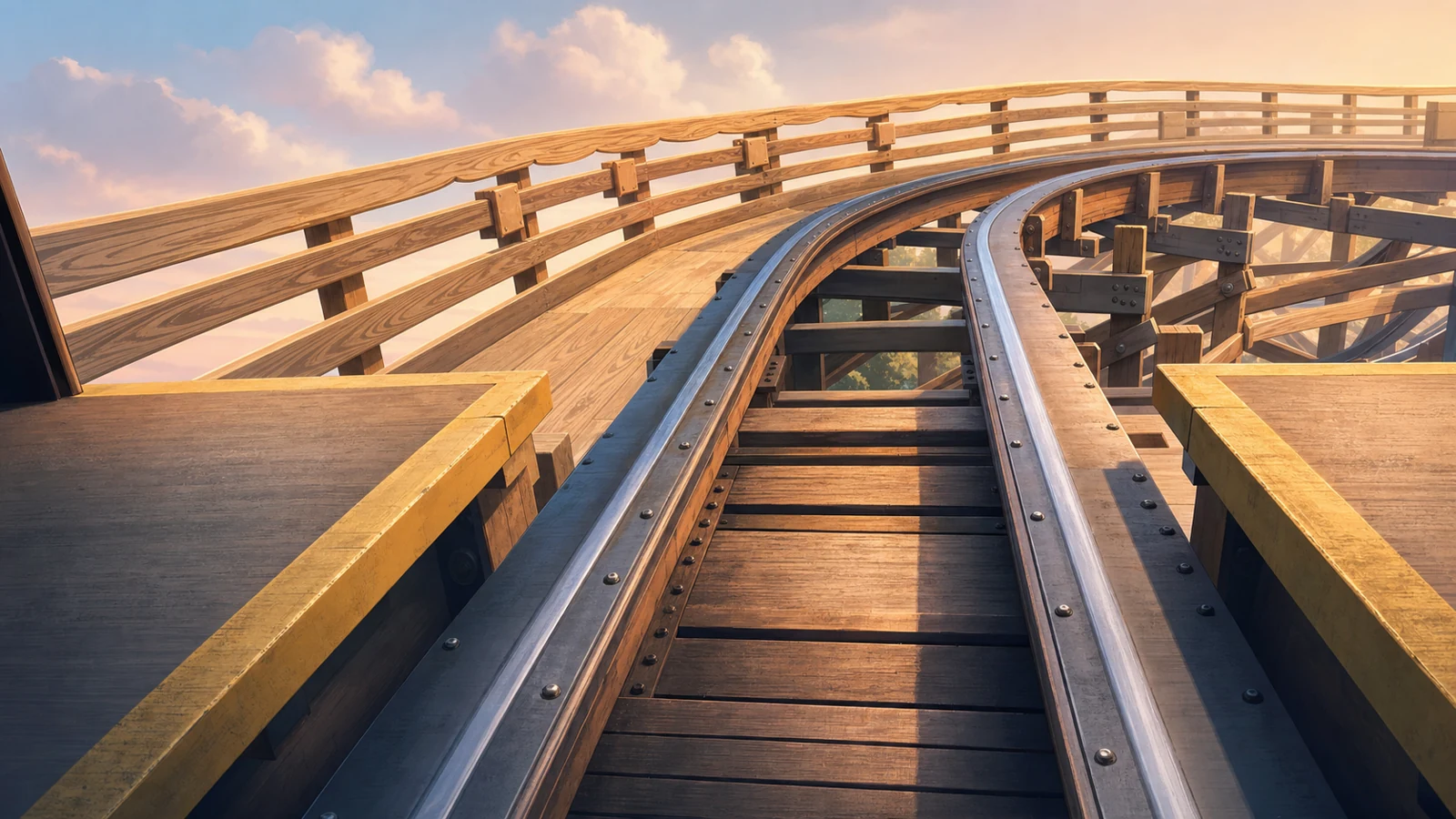
Wood moves. It expands and contracts with heat, it swells with humidity, and it flexes under the dynamic load of a train. A magnetic launch needs the air gap between the train's fins and the track coils to stay inside a tight tolerance, and the moment the wooden structure shifts even slightly, the system reads an out-of-spec condition and trips a fault. That is the contradiction sitting at the center of Lightning Rod, and the maddening part is that it was a contradiction Dollywood chose on purpose. According to the rundown in the "FAILED Roller Coasters" documentary on YouTube, when Rocky Mountain Construction first drew up the ride, they proposed their all-steel I-Box track, which would have been the structurally sane way to launch a train. Dollywood's parent company, Herschend Family Entertainment, pushed back and insisted on RMC's Topper Track instead, the system that keeps a real wooden structure underneath with only a steel-capped rail on top. The reason was marketing: Topper Track let the ride keep its "wooden coaster" classification, and a launched wooden coaster was a first nobody else could claim.
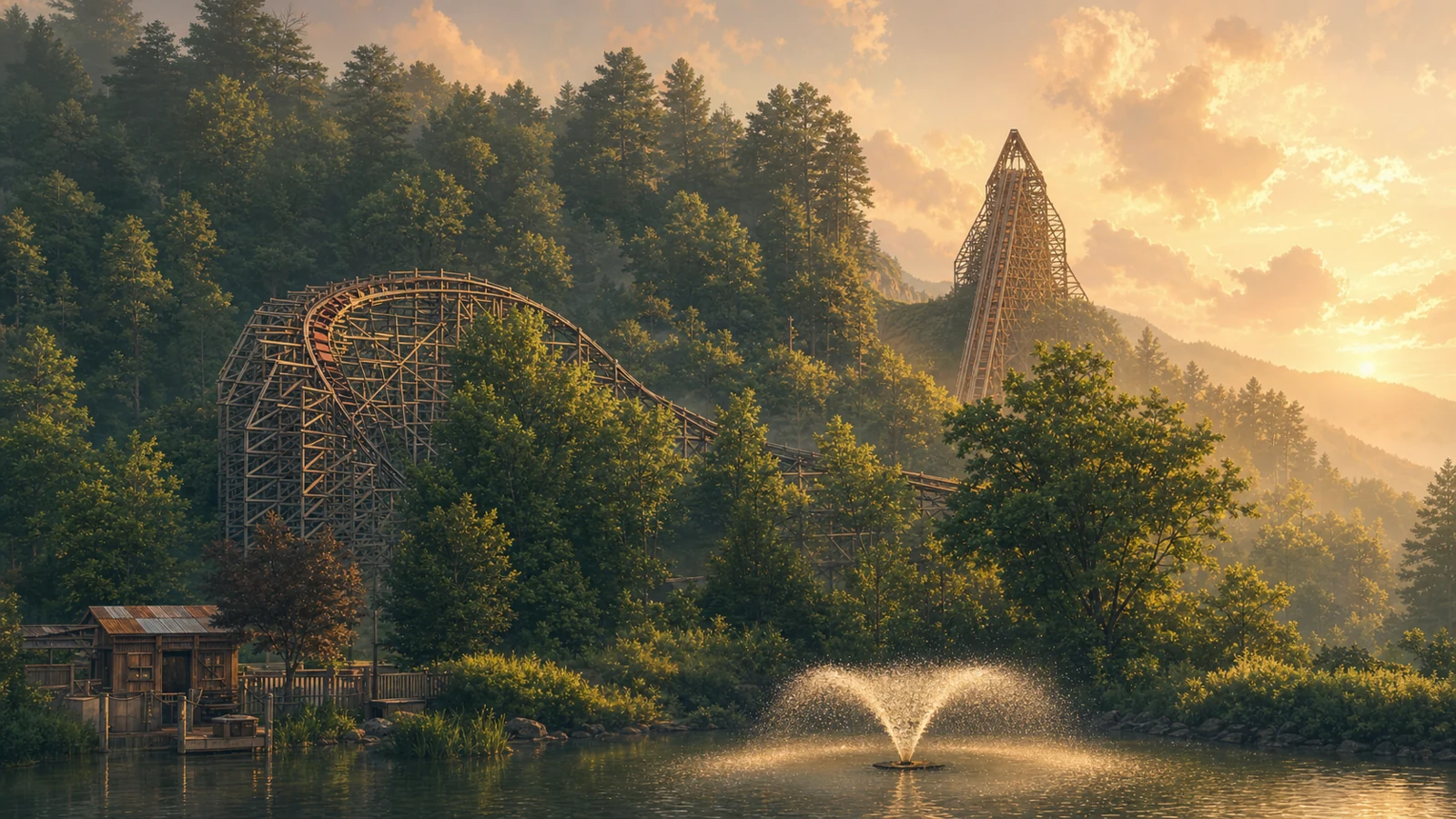
The terrain is what made a launch tempting in the first place, so this wasn't pure stubbornness. Dollywood sits in the foothills of the Smoky Mountains, and the plot chosen for Lightning Rod behind the park's Jukebox Junction area climbs a steep, wooded ridge. A normal chain lift up that grade would have been a slow, joyless crawl that bled all the energy out of the opening. RMC's founder Fred Grubb sold Herschend on the launch concept before the ride even existed, and he did it with a stunt. Per that same documentary, he drove company officials out to the sand dunes of Idaho in off-road sand rails to simulate the feeling of an uphill launch, reportedly catching so much air that he nearly killed himself doing it. The pitch worked. What it left out is that RMC had never built a launch coaster and didn't have the people to engineer one in-house, so the launch system itself went to a third party, Velocity Magnetics of Pennsylvania, a company that had also never built one for a roller coaster. Two firms attempting their first launch, on the one coaster type that had never been launched. We'd say that's about as much new ground as you can break on a single ride.
What they built, when it worked, was genuinely special. The numbers, drawn from RCDB and Dollywood's own page, tell you why enthusiasts fell for it even as it broke their hearts:
| Spec | Lightning Rod (as built, 2016) |
|---|---|
| Drop | 165 feet |
| Top speed | 73 mph (fastest wooden coaster in the world at opening) |
| Track length | 3,800 feet |
| Original launch | 0 to 45 mph up the lift, via LSM |
| Total elevation change | 206 feet across the terrain |
| Airtime | nearly 20 seconds |
| Cost | $22 million, the biggest single-attraction investment in Dollywood history at the time |
The layout reads like a designer's wish list. The train launches up and over the lift, drops 165 feet down the mountainside, and runs a course of overbanked turns and airtime hills that finishes with a quad-down, four straight pops of ejector air down the natural slope of the hill. Designer Alan Schilke had a long history with this kind of terrain coaster going back to his Arrow Dynamics days, including the original Tennessee Tornado a few ridges over at this same park, and Lightning Rod is him pushing wood about as far as it will physically go. It won Amusement Today's Golden Ticket for Best New Ride in 2016, climbed as high as fifth in Amusement Today's annual wooden coaster rankings by 2017, and got named Wooden Coaster of the Decade in a 2019 enthusiast poll that Dolly Parton's own site was happy to quote.
The problem was that it was almost never open. Lightning Rod was supposed to debut with the park's 2016 season in March, and it simply didn't. On March 24, 2016, Fred Grubb put out a statement through CoasterNation that has held up as the politest possible way to say a launch system doesn't work:
As is often the case with prototype attractions and especially with launched coasters, delays are an ever-present possibility. During the course of testing, we determined that the third-party launch system would not be able to perform at the level required for proper operation. While we strive to meet all of our deadlines, we cannot and will not sacrifice safety or ride quality in the name of saving time.
It limped to a real opening on June 13, 2016, then closed again days later for a parts recall that hit several RMC rides at once, then crept back as a "technical rehearsal," which is park language for "this could shut down at any moment." It was finally called fully operational in September. The years that followed settled into a pattern. The Canobie Coaster channel tallied major downtime in four of the ride's first five years, and the reputation got bad enough that Knoxville station WBIR-TV ran a segment on it, though even the local news pushed back on the worst of it and noted the ride wasn't actually down more often than not (per the Lightning Rod record on Wikipedia). Around mid-2017 the park quietly adjusted the launch, cutting it off sooner so the train crested the lift at a gentler speed, a tweak that enthusiasts came to call the "neutering." A 2017 review from the Coaster Critic captured the whole experience of the era: "amazing potential and anticipation marred by inconsistency and disappointment." It was one of the most unreliable major attractions in the country, and everyone who loved it knew it.
So Dollywood started undoing the original idea, one piece at a time. The first big surgery came over the 2020 and 2021 off-season, when RMC pulled out the Topper Track in the most stressed sections, including the lift and that 165-foot drop, and replaced it with their fully steel I-Box. That swapped out 2,160 feet of track, about 57 percent of the layout, which was enough that RCDB reclassified Lightning Rod from a wooden coaster to a steel one. The goal was reliability, plain and simple. Then-president Eugene Naughton laid it out in a 2021 video from Sdanwolf, pointing to how the same Topper-to-I-Box conversion had moved other coasters "from, you know, 60 to 70 percent operation, well into the mid-90s." His colleague Pete Owens put the customer side of it more bluntly: the park wanted "to make sure that when you come to this park this ride is open when you come." It reopened on I-Box track in March 2021, more steel than wood, and still the launch gave them trouble.
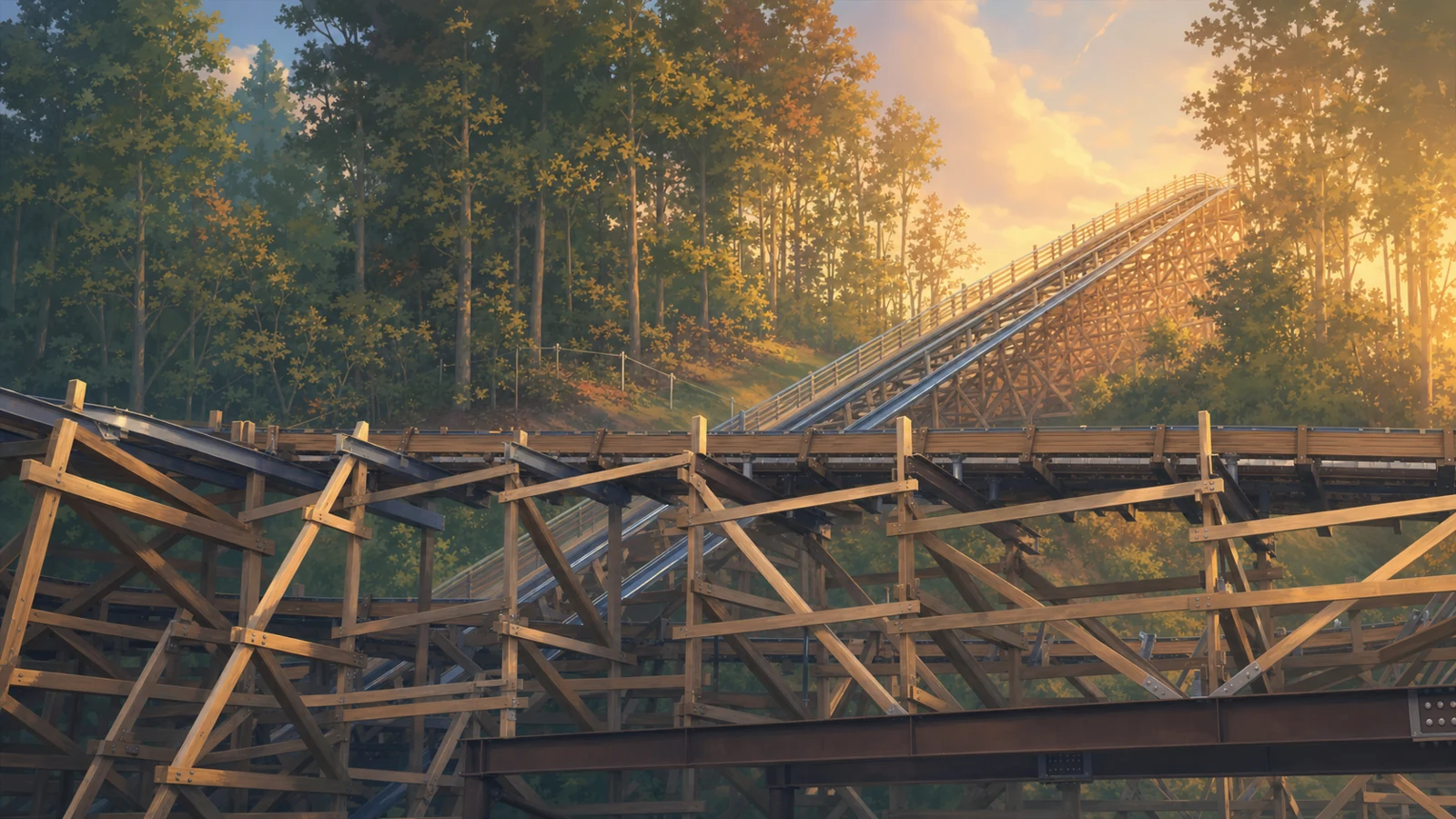
The launch was the last thing to go. In September 2023 Dollywood announced that the LSM system would be removed entirely and replaced with a variable frequency chain lift, the exact thing the ride had been built to avoid. The official line, reported by Inside the Magic, was that this would give guests "a more consistent and efficient ride experience," and that "once the coaster trains reach the first drop, the ride experience will remain the same as it is currently." That last part is mostly true. Everything past the lift survives, drop and speed and airtime and the quad-down finale, and the ride still hits 73 mph. What's gone is the launch itself, the catapult from a dead stop up a near-vertical hill that was the single most distinctive thing about it. Lightning Rod reopened with its chain lift in March 2024, and it finally runs the way a major coaster is supposed to.
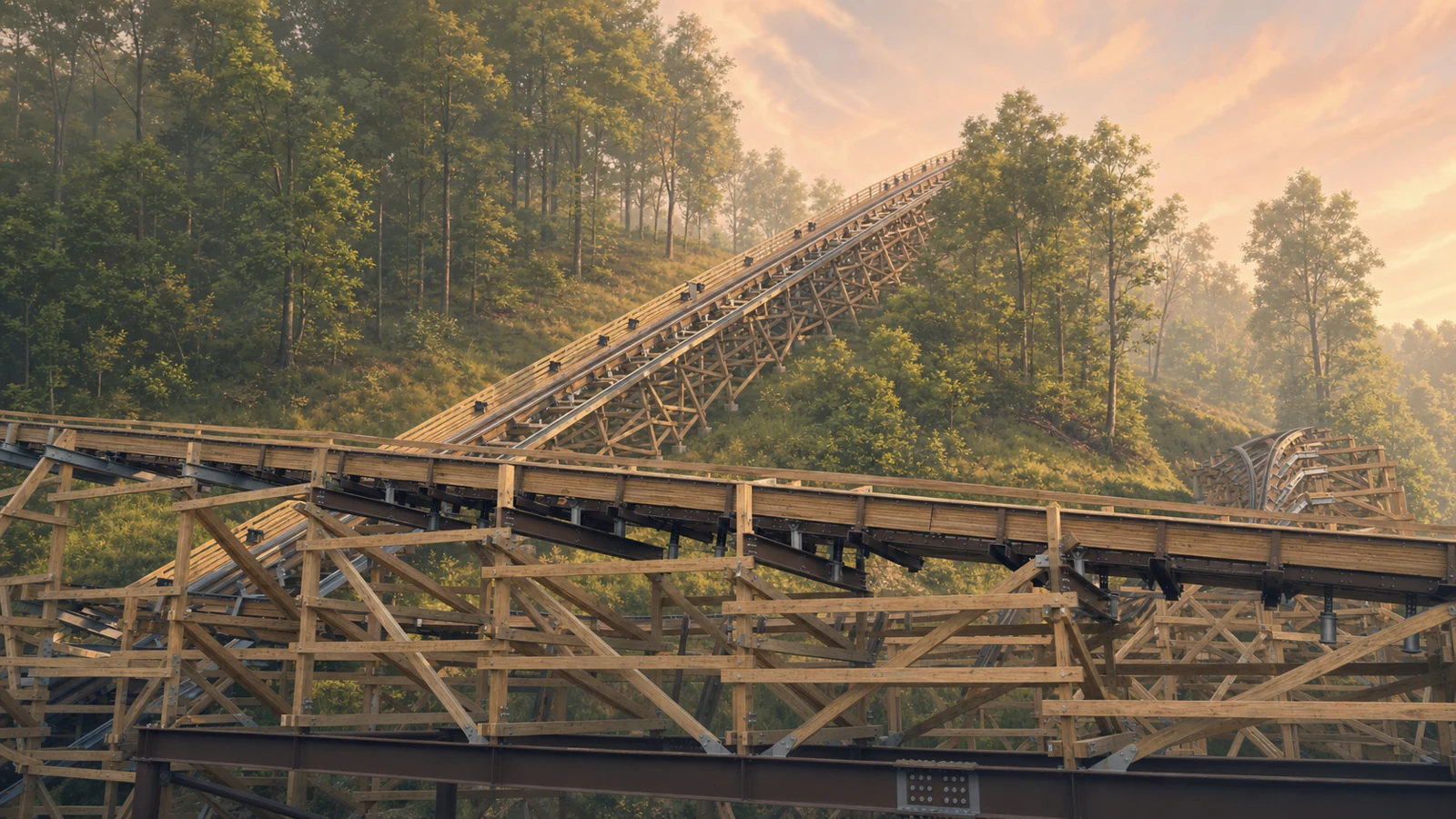
That trade is the honest center of this story, and it's worth not flinching from. The fix worked, and a Lightning Rod that runs every day is plainly better for the people standing in line than a brilliant one that's roped off four months a year. But the thing they removed is the thing the ride was famous for, the reason it earned its place in the record books, and you can't pretend that's a free trade. The version riding the hillside now is a terrific RMC coaster with a chain lift. The version that opened in 2016 was something nobody had ever built and, almost certainly, nobody will build again. The engineering lesson got absorbed industry-wide: launch and wood don't mix, and no one has tried a launched woodie since.
Which is the strange way Lightning Rod ends up keeping the record it set out to grab. It was never going to be the fastest woodie forever, and it isn't even fully wooden anymore. But the title it actually chased, the world's first launched wooden coaster, is the one nobody can take, precisely because the idea was hard enough that the world tried it once, learned its lesson, and stopped. First and, in all likelihood, last. For a ride that spent eight years being more frustrating than almost anything else in the hobby, we'd say that's a fair accounting of what it was, and what it'll be remembered as.